
Who I am and why this section exists
My name is Alex Kokh. I'm an engineer who fixes WordPress sites when they go down, break after an update, or get hacked. This is the first entry in the Research section, and I want to explain right away what fixops.pro is, what I do, and why I love doing it.
Why "Research" and not "Blog"
A blog usually means news and opinions. I called this section "Research" because that is what my work actually looks like.
Every day brings a new problem. The same symptom, a white screen for example, can have a dozen different causes: a plugin conflict, a memory limit, a corrupted database, malicious code. There is no ready-made recipe. There is a hypothesis, a test, a conclusion, and the next hypothesis.
I care about more than the fix itself. Three things matter to me:
- Finding the root cause, not muting the symptom.
- Finding a simpler, more elegant solution. The best fix is often a single line, but to find it you have to understand the whole process.
- Turning a one-off case into knowledge. A solved incident becomes a rule, a monitoring check, or a step in a checklist.
That is why I write every piece here as a small piece of research: what we observed, which hypotheses we tested, what turned out to be the cause, and what follows from it. These are notes about processes, not advertising.
My background
I started out administering industrial systems in Ukraine. It is a school where downtime is measured in money and "let's wait until Monday" does not work. That is where I learned discipline: backups, clear rollback procedures, monitoring, on-call duty.
For the last 5+ years I have worked as a freelance full-stack developer. I built sites, and then more and more often I stayed on to maintain them. Today I look after more than 50 WordPress sites on an ongoing basis. Having both sides of the picture, development and operations, lets me see a problem as a whole and not just my own piece of it.
What FixOps is
The name combines two words: Fix and Ops (operations). It is an emergency service for the moment your site stops working while your business keeps losing customers.
These are the problems people bring to me most often:
- a white screen or a 500 error after a plugin or theme update;
- a hacked site: foreign code, spam redirects, warning emails from the hosting provider;
- a site that has become slow and "dies" under load;
- nobody knows what exactly broke, or when.
My job is to bring the site back quickly, understand the cause, and make sure it does not happen again.
Where FixOps sits in the SDLC
The SDLC (software development life cycle) is usually drawn as a loop: planning, design, development, testing, release, maintenance. Most of the attention goes to the early stages. Designers, developers and agencies build the site and hand it over.
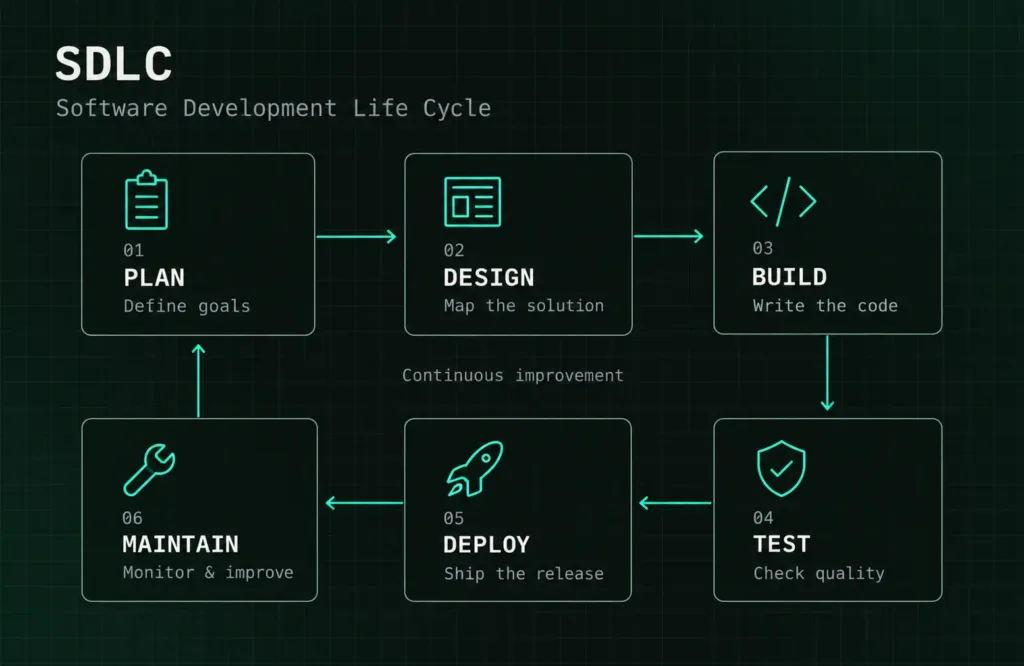
Then the longest part of a site's life begins: operations. WordPress core and plugins get updated, PHP versions change, vulnerabilities appear, the server hits its limits. Very often, at that point there is nobody responsible for any of it.
FixOps covers exactly that part of the loop:
- Incident response. The site is down or hacked: restore it and analyze the cause.
- Maintenance. Controlled updates with a backup and a way to roll back.
- Monitoring. Learn about a problem before your customer writes to you about it.
- Feedback into development. Lessons from incidents flow back into code and configuration so the mistake does not repeat.
To me, operations is not "support after the project". It is a full part of development, and it decides whether the product survives.
Why I love this work
I love work where the result is visible immediately. The site was down, now it is up. I enjoy the investigation itself: logs, change history, comparing files against a clean copy, hunting for the one line that stopped everything. It is detective work with a clear ending.
I also like that people feel calmer when someone is responsible for their site. A small business owner does not have to understand PHP and hosting. They just need to know that someone is watching and will step in.
Monitoring as a passion
Monitoring systems are a separate passion of mine. I build them on Prometheus, Loki and Grafana. In plain words, these are tools that constantly collect metrics and logs from sites and turn them into clear dashboards and alerts.
A site owner does not need to know these names. What matters is the outcome: the person who can fix a problem should hear about it first, not the person who suffers from it. Good monitoring turns chaos into a clear picture: availability, response time, update status, SSL, file changes, backup health. In future research entries I will explain how it works and which metrics are actually useful in practice.
AI in my work
The second direction I am passionate about is developing and deploying AI. I do not see it as a magic button. For me it is a tool that speeds up routine work:
- analyzing large logs and spotting anomalies;
- first-pass diagnostics: what could have caused the failure;
- automating repetitive operations;
- preparing incident reports.
Decisions are made by a human, especially when someone else's data and a live site are involved. AI gives speed, while responsibility and verification stay with the engineer.
Outside of work
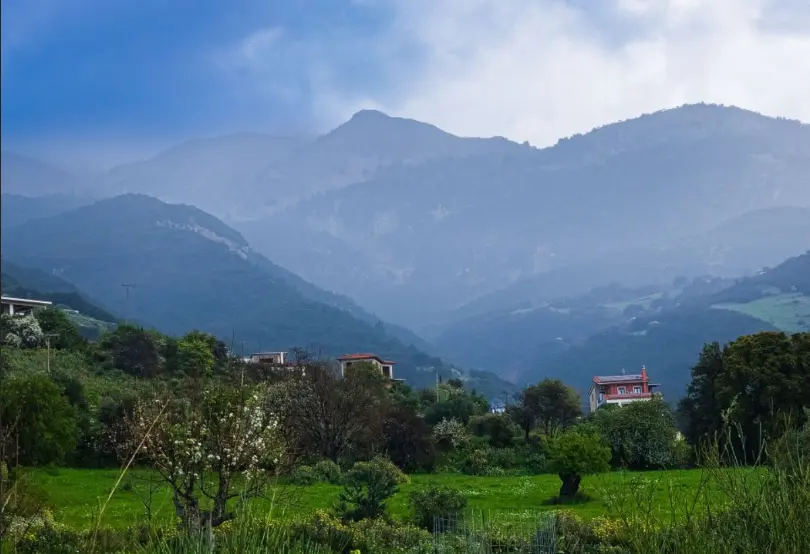
I love hiking in the mountains. There you quickly learn the value of preparation: a route, gear, a backup plan. It is very similar to reliable site operations. I also love swimming in the sea, especially when it is calm and you can simply switch your head off.
These hobbies teach the same thing: calm and preparation matter more than last-minute heroics.
What's next
In the coming research entries I will cover:
- what a typical investigation of a hacked WordPress site looks like;
- how to update plugins safely without risking production;
- which monitoring metrics to set up first;
- how I use AI in diagnostics, and where it gets things wrong.
Let's work together
I am open to collaboration. If your site is down or hacked, if you need ongoing care for a project, if you are an agency that wants to hand client maintenance to a reliable partner, or if you simply have a task you would rather not deal with yourself, get in touch. I reply fast, with no unnecessary calls and no technical jargon.